
Sitting Bull wants to go further. Help Honza expand his arena.

Litoměřice / Organizer: Jindra Landová "Obyčejná máma"

Collected
193 804 Kč

The campaign is running on Znesnáze21
Sitting Bull Has Nothing to Sit On. Help Honza Expand His Arena with a New Powered Wheelchair.
Honza started calling himself Sitting Bull after the accident that changed his life overnight when he was eighteen.
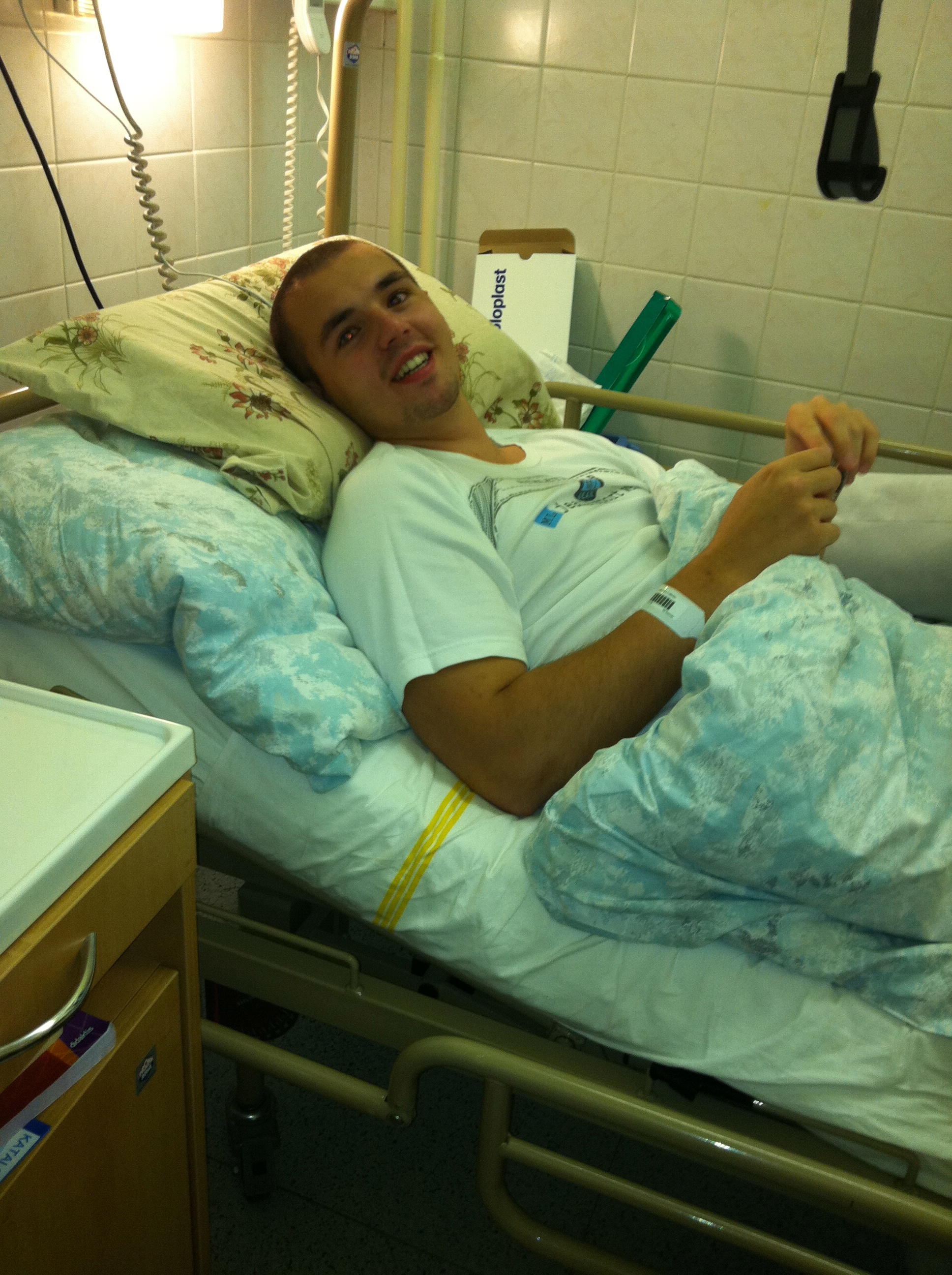
In the summer of 2012, he travelled to Dresden for a language course. One night, while asleep, he fell from a balcony. He suffered a severe brain injury and a spinal cord injury in the thoracic region. He remained unconscious for eleven days.
He spent the following month in a hospital in Germany, another two months at the spinal unit in Motol University Hospital in Prague, and then approximately seven months at the Kladruby Rehabilitation Institute.
The spinal cord injury was not the only consequence.
Because of the brain injury, he initially had major difficulties concentrating and effectively had to learn how to learn again. For a while, he was unable to swallow normally, would choke while eating, and had to eat extremely slowly.
Fortunately, his swallowing reflex improved significantly within a few weeks. He permanently lost his sense of smell and also lost hearing in his left ear.
And the complications continued.
It was only about two months after the accident that doctors discovered he had also broken his arm. By then, the bone had healed incorrectly. It had to be operated on again, re-broken and fixed with screws. A severe infection followed, along with several days of fevers exceeding 41°C. To this day, Honza remembers only fragments of that period.
Later, the titanium screws stabilising his injured spine broke, and in December 2013 he had to undergo another operation to have them removed.
Despite all this, he tried to return to the life that had suddenly stopped when he was eighteen.
He had to relearn how to concentrate and study and then complete his secondary school leaving exams. During the first few years, he repeatedly tried to get into university, but not everything worked out the first time. At the same time, he underwent extensive rehabilitation and, like many people after a similar injury, searched for different treatment options and hoped for improvement.
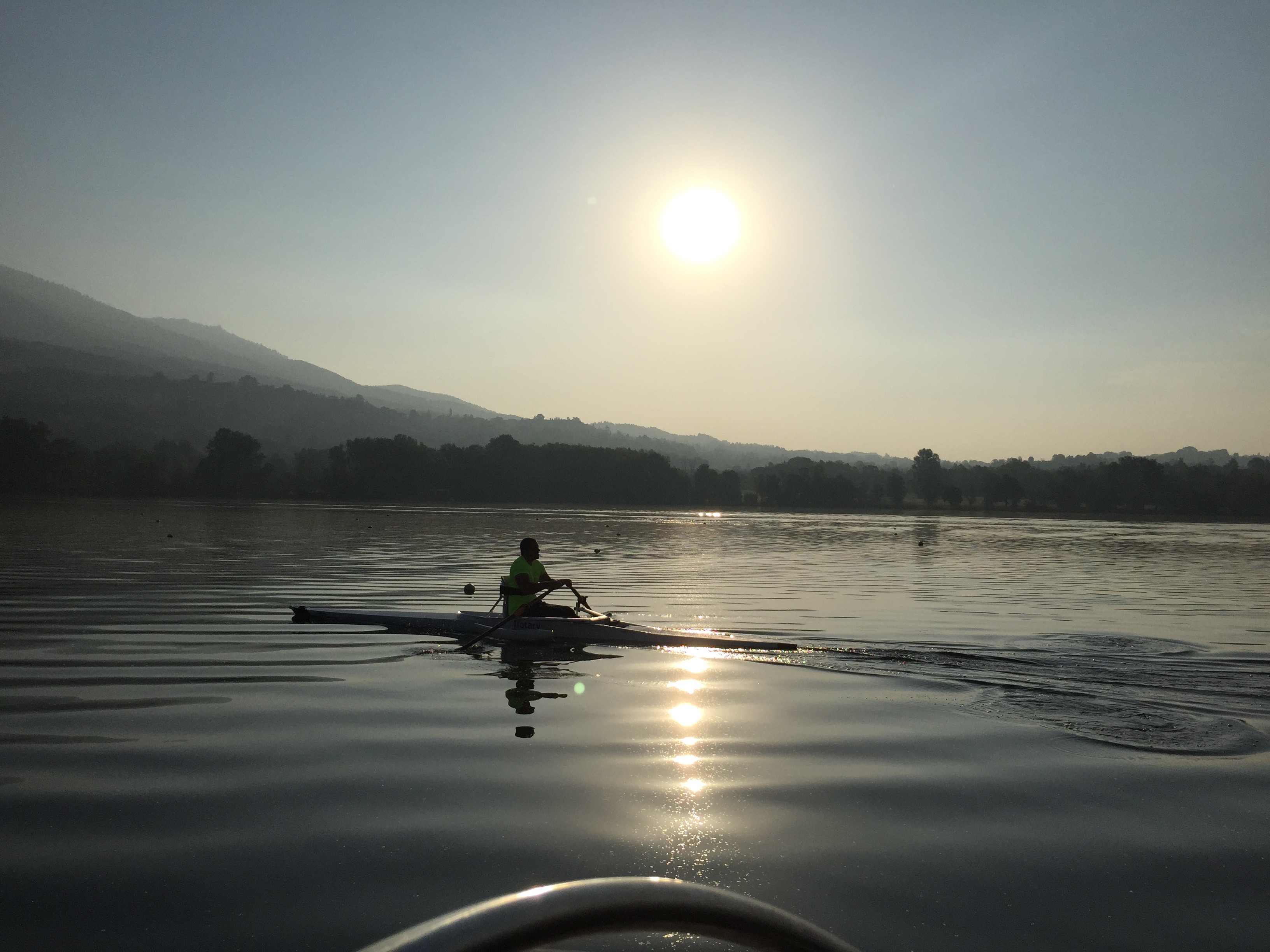
Alongside this, he took up competitive rowing. In 2014 and 2015, he represented the Czech Republic in para-rowing.
At the World Cup in Gavirate, Italy, he won a silver medal, and he also represented the Czech Republic at the World Championships in France.
In 2015, he was finally admitted to law school in Olomouc. But managing the studies themselves was not enough. At the time, commuting every day in a wheelchair was so difficult and exhausting that he eventually had to give up the programme.
So he tried again.
He prepared for another round of entrance exams and was admitted to the Faculty of Law at Charles University in Prague, which he eventually graduated from.
Even while studying law, however, he was already thinking about what kind of professional path he would realistically be able to sustain long-term given his physical limitations. So alongside his legal studies, he began learning computer science and programming.
After graduating, he joined Vodafone as a software developer and gradually moved into a team working with artificial intelligence, where he works today.
He has also appeared several times in Czech Television reports on accessibility in Prague, helping to demonstrate the obstacles that wheelchair users encounter in an ordinary city environment.
None of this means, however, that the consequences of his spinal cord injury have disappeared. The wheelchair is really only the visible tip of the iceberg.
Living with a spinal cord injury means chronic fatigue, neuropathic pain, muscle spasms, recurring health complications, the need for regular rehabilitation, and a much higher energy cost for ordinary daily activities. Personal hygiene, getting dressed, or simply preparing to leave for work takes Honza significantly more time and energy than it would for an able-bodied person.
He compares it to waking up every morning and being handed a 50-kilo weighted vest that you then have to wear throughout the entire day. The people around you cannot see it, so they naturally expect roughly the same performance from you as from someone who is not carrying that extra weight.
And that is why it is not so simple to say: “If he works, why doesn’t he just save up for a new wheelchair and power attachment?”
Living with a disability brings ongoing costs for rehabilitation, doctors, medical equipment, co-payments, and many other things that are necessary precisely so that a person can remain as functional as possible, continue working long-term, and live at least somewhat independently.
How the fundraising will help?
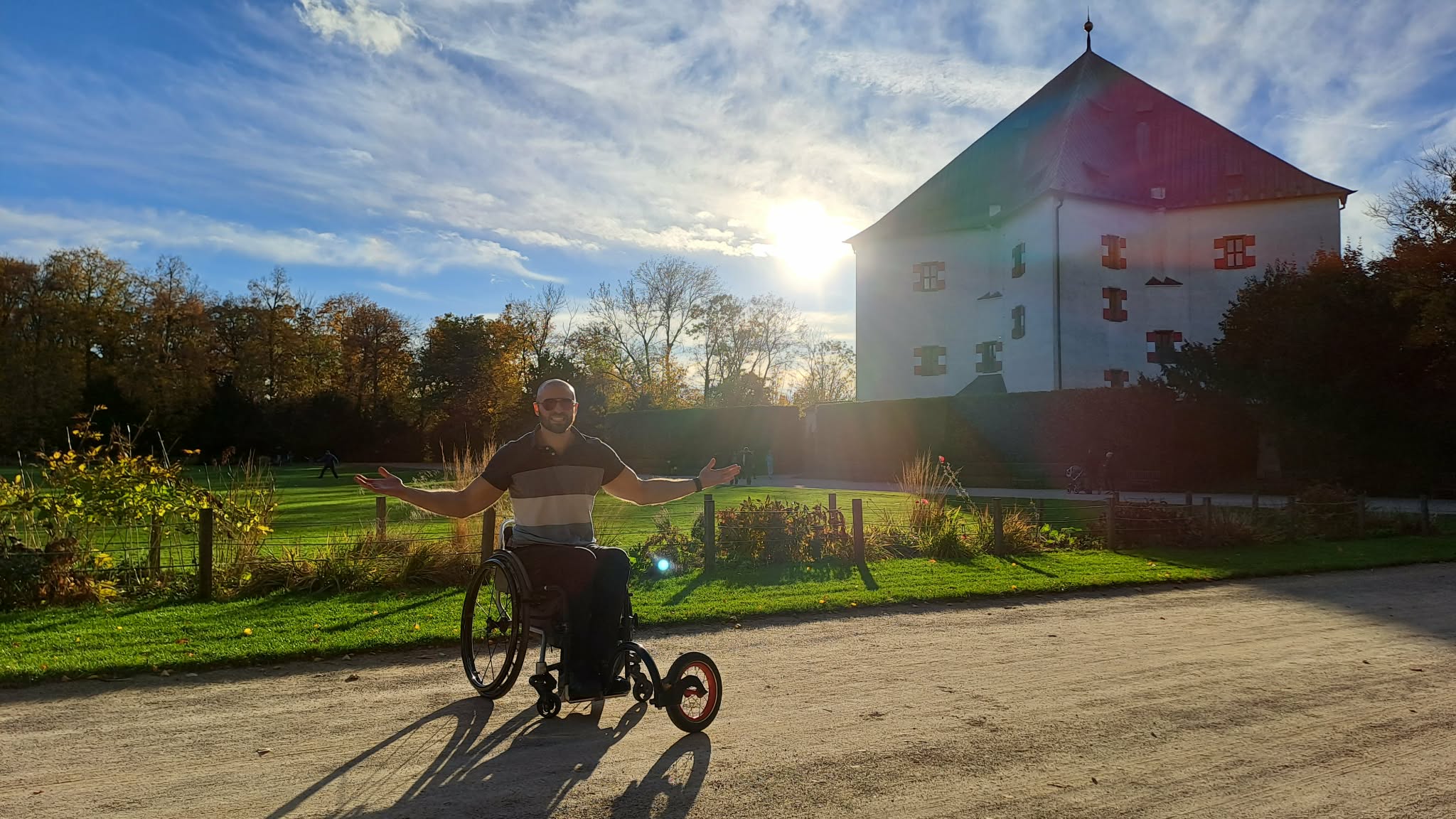
Honza’s current manual wheelchair is approximately seven years old and is no longer in good condition. He needs a new lightweight manual wheelchair together with a Triride electric power attachment.
His health insurance may cover part of the cost of the new wheelchair, but Honza has already been waiting several months for the approval process. However, health insurance does not contribute towards the electric power attachment.
And it is precisely the power attachment that would make the biggest difference.
In a manual wheelchair, Honza is dependent mainly on the strength of his arms and shoulders. Cobblestones, uneven pavements, steeper hills or longer distances can determine whether he can get somewhere independently or whether he will need another person’s help.
The Triride can be attached to a manual wheelchair, disconnected again, and transported relatively easily in a car. It would allow Honza to visit his family in his hometown, go on trips, or travel somewhere by car without having to analyse every few hundred metres of the route in advance to see whether there is a steep hill or an unsuitable surface.
The power attachment would allow him to manage longer distances, hills and rougher terrain independently, reduce the strain on his arms and shoulders, and above all greatly expand the area in which he can move without relying on someone else’s assistance.
The total cost of the new wheelchair and electric power attachment is approximately CZK 327,000. Honza has already managed to secure part of the required amount from other sources and foundations, specifically CZK 103,600. This means there is no longer a need to raise the full original amount.
If the full amount cannot be raised, the main priority will be the electric power attachment, which is not covered by health insurance. Honza would then try to cover the remaining costs through a combination of a health insurance contribution towards the wheelchair, support from foundations, and his own funds.
If, on the other hand, more money is raised than needed, Honza would like to use the additional funds for other modifications that would allow him to live more independently, particularly making his bathroom more accessible, as it also needs renovation. This would, of course, only be done if such use of funds is permitted under the rules of the fundraiser.
In fourteen years, this is the first time Honza has asked the public for help in this way.
It is not easy for him to put his story out into the world like this. At the same time, he knows that greater independence is worth it.
Over the past fourteen years, Sitting Bull has managed many things through his own determination and effort.
This time, however, a few thousand people making a small contribution could help him overcome an obstacle that determination alone cannot solve.
198 donations

